
Volunteering to Run a North Carolina Community Event: What the Volunteer Immunity Law Actually Covers
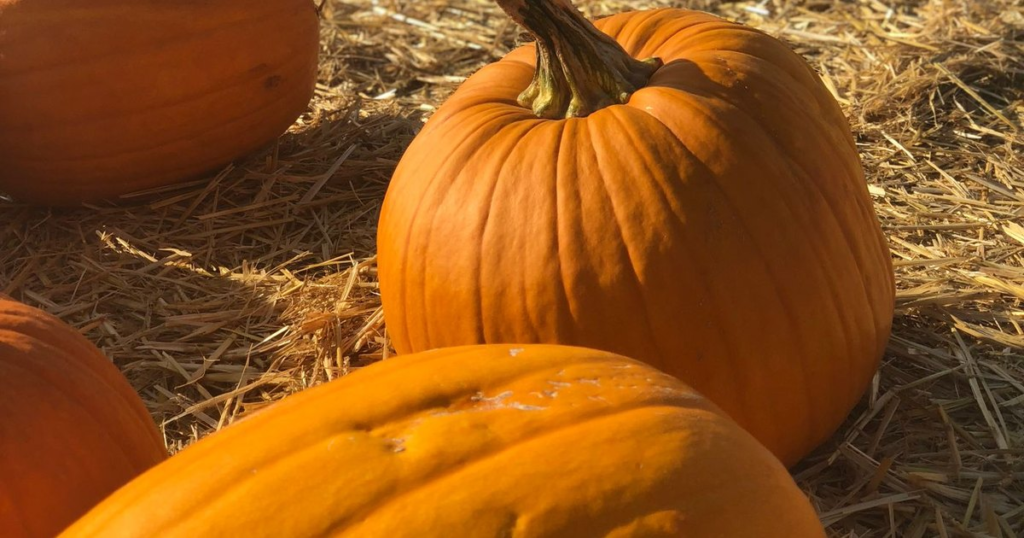
The sign-up sheet goes around at the end of an October meeting — fall festival, trunk-or-treat, holiday market, spring 5K — and somebody writes their name beside “event chair” without thinking hard about it. Six weeks later the town’s permit packet comes back asking for a certificate of insurance with a dollar figure on it, and the question of who is actually on the hook stops being abstract.
North Carolina does protect volunteers. It protects them less completely than most people assume, and the two places the protection runs out are the two places an event is most likely to go wrong.
What the volunteer immunity statute says
N.C. General Statute 1-539.10 is titled “Immunity from civil liability for volunteers.” It has been on the books since 1987 and was amended in 2005. It shields a volunteer who performs services for a charitable organization from civil damages for resulting injury, death or property loss — but only when two conditions hold. The volunteer has to have been “acting in good faith and the services rendered were reasonable under the circumstances,” and the acts or omissions must “not amount to gross negligence, wanton conduct, or intentional wrongdoing.”
The companion section, G.S. 1-539.11, defines the terms narrowly. A volunteer serves without pay or anything of value in place of pay, aside from reimbursement of actual expenses. A charitable organization has humane or philanthropic aims, operates without expected profit and holds tax-exempt status. Two consequences catch people out: a paid event coordinator is not a volunteer here, and a neighborhood group that never filed for tax-exempt status is not a charitable organization here either.
The two holes, and both of them show up at events
The first is vehicles. The immunity does not reach acts or omissions occurring “while the volunteer was operating or responsible for the operation of a motor vehicle.” Read that second clause again — it is wider than driving. Hauling tables in a personal truck, towing hay bales, shuttling vendors from an overflow lot, running a tractor for a hayride: all outside the protection.
The second surprises people who only read the first half of the statute. Subsection (b) provides that a charitable organization or a volunteer carrying liability insurance “shall be deemed to have waived the qualified immunity herein to the extent of indemnification by insurance.” In plain terms, coverage that exists is coverage that can be reached. That is not an argument for going without — a claim against an uninsured group still has to be defended — but it is why the limit on the certificate, rather than the statute, usually ends up being the number that matters.
What your town actually asks for
Permit requirements are set locally, and two Wake County towns make the point better than any general statement could.
The Town of Garner’s Special Event Permit Application, issued through Parks, Recreation and Cultural Resources, requires a certificate of liability insurance naming the Town as additional insured for Class A–C events. The form states that “The Town requires at least $1,000,000 coverage per occurrence for bodily injury and property damage,” with an endorsement naming the Town “specifically and separately.” The certificate “must be provided no less than 14 days prior to the event,” applications are due “at least 90 days in advance,” and there is a $50 non-refundable application fee.
The Town of Wake Forest tiers it instead. Under its special events policy revised May 31, 2026, Tier 1 events — general and neighborhood events — call for $2,000,000 per occurrence. Tier 2 events, which include street festivals, carnivals, concerts, parades and walk or race events, call for $5,000,000 per occurrence, with liquor liability at $5,000,000 where it applies, and the Town, its officers, agents and employees included as additional insured. Lead times run from 60 days for a neighborhood event to 180 days for a street festival, carnival, concert or parade. Permit fees run $25 to $100, and the policy also calls for a refundable deposit of at least $500 for events without alcohol and at least $3,000 for events with alcohol.
Same county, comparable events, and a required limit that differs by a factor of five. Nobody should price event coverage from a number they heard at another town’s festival.
Where that certificate is supposed to come from
Broadly, two routes. A single-date special event liability policy is written for one address and one block of time, which is what a permit office is usually expecting. Or a sponsoring organization that already carries general liability coverage can often have the town added by endorsement for the date.
Worth checking before assuming either is handled: a homeowners policy is built around the household and the residence premises, and many forms limit or exclude liability arising out of business pursuits and out of activities performed for an organization. Whether a personal policy follows the policyholder onto a public festival field is a question for that specific declarations page. An umbrella policy is a different tool again — it sits above underlying coverage rather than standing in for it, so on its own it generally will not produce the certificate a permit office wants.
The driving is a separate question entirely
Because of the motor vehicle exception, volunteer driving is where the statute stops helping and auto liability carries the weight. Worth knowing where the floor sits: the North Carolina Department of Insurance reports that effective July 1, 2025, minimum liability limits rose to $50,000 per person and $100,000 per accident for bodily injury and $50,000 for property damage, up from $30,000/$60,000/$25,000. Underinsured motorist coverage is now included in all new or renewed policies.
So the volunteer with a borrowed trailer and the volunteer running the shuttle van are worth a conversation well before the morning of: who owns the vehicle, who insures it, and whether anyone is being paid — which can pull the arrangement out of the statute’s volunteer definition altogether.
What to actually do
- Pull the permit packet now, not in the week of the event. Lead times run 60 to 180 days, and no certificate fixes a missed application deadline.
- Ask the permit office for three things in writing: the exact limit, the precise additional-insured wording, and the date the certificate is due.
- Settle on paper who is hosting. The statute runs to volunteers serving a tax-exempt charitable organization; an informal neighborhood committee is a different situation.
- List every vehicle and trailer that will move anything for the event, and who will be operating each one.
- Decide the alcohol question before pricing anything. It changes the required limit, the deposit, and the permitting.
- Then talk with a licensed agent about whether a single-date event policy or an endorsement to an organization’s existing coverage fits what you are actually running.
Our pages on home insurance, umbrella insurance and auto insurance walk through how each one is structured in North Carolina — a reasonable place to start before you call.
Sources
- N.C. General Statute 1-539.10, Immunity from civil liability for volunteers: ncleg.gov
- N.C. General Statutes, Chapter 1, Article 43B (definitions at G.S. 1-539.11): ncleg.gov
- Town of Garner Special Event Permit Application, Parks, Recreation & Cultural Resources: garnernc.gov
- Town of Wake Forest Special Events Policy, revised May 31, 2026: wakeforestnc.gov
- N.C. Department of Insurance, Changes to the Rating of Automobile Insurance Policies, Effective July 1, 2025: ncdoi.gov
This article is general information about how coverage works in North Carolina. It is not advice about your specific policy. Coverage terms, limits and availability vary by policy — check your own declarations page or talk with a licensed agent before making a change.
While you’re in the neighborhood
We’re in Garner, right next door to the Post Office. Stop in or call — we’ll look at your current auto, home, life, or business coverage and tell you honestly whether we can do better. No pressure either way.
You Insurance Agency · Garner, NC · right next door to the Post Office · Auto · Home · Life · Commercial