
Serving Alcohol at a North Carolina Wedding: Permits, Venue Certificates and Who Is Liable
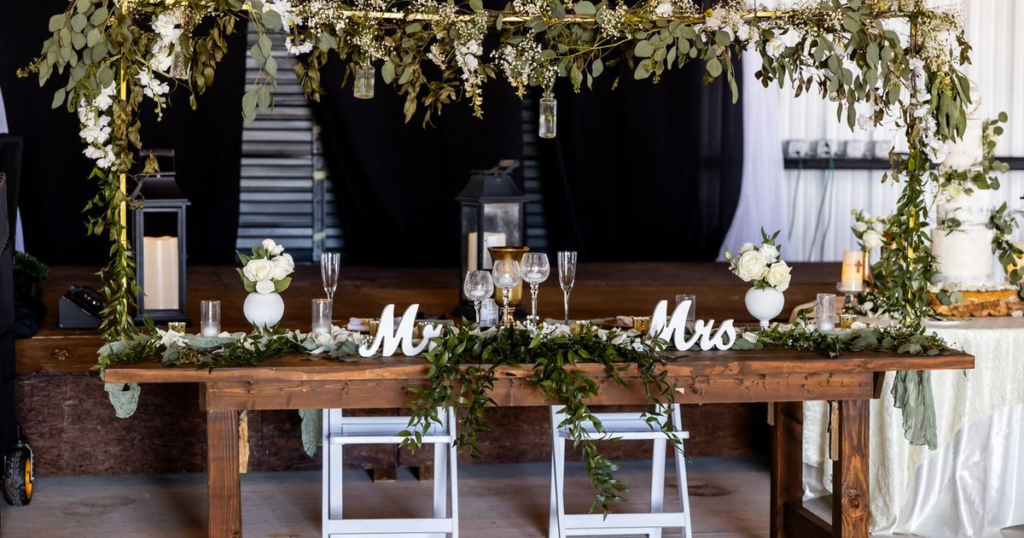
A barn venue outside Garner sends the contract over in September, and somewhere past the deposit schedule is a line most couples read twice: the renter has to provide a certificate of insurance naming the venue as an additional insured. A few paragraphs later there is a second line about alcohol. Those two sentences do more work than they look like they do, and October and November are when North Carolina couples run into them.
What a venue is really asking for when it wants a certificate
A certificate of insurance is a one-page document from an insurer confirming that a policy exists, what it covers and what the limits are. “Additional insured” is the part the venue cares about: it means the venue has been added to your event liability coverage for that date, so a claim arising out of your reception has somewhere to go besides the venue’s own policy. Single-date special event liability policies exist for exactly this, usually written for one address and one block of time.
Before you shop for anything, get four things from the venue in writing: the exact limit required, the precise additional-insured wording they want, whether liquor-related coverage has to be included, and the date they need the certificate in hand. Venues differ on all four, and a certificate missing one of them tends to come back.
North Carolina’s alcohol rules are narrower than most couples expect
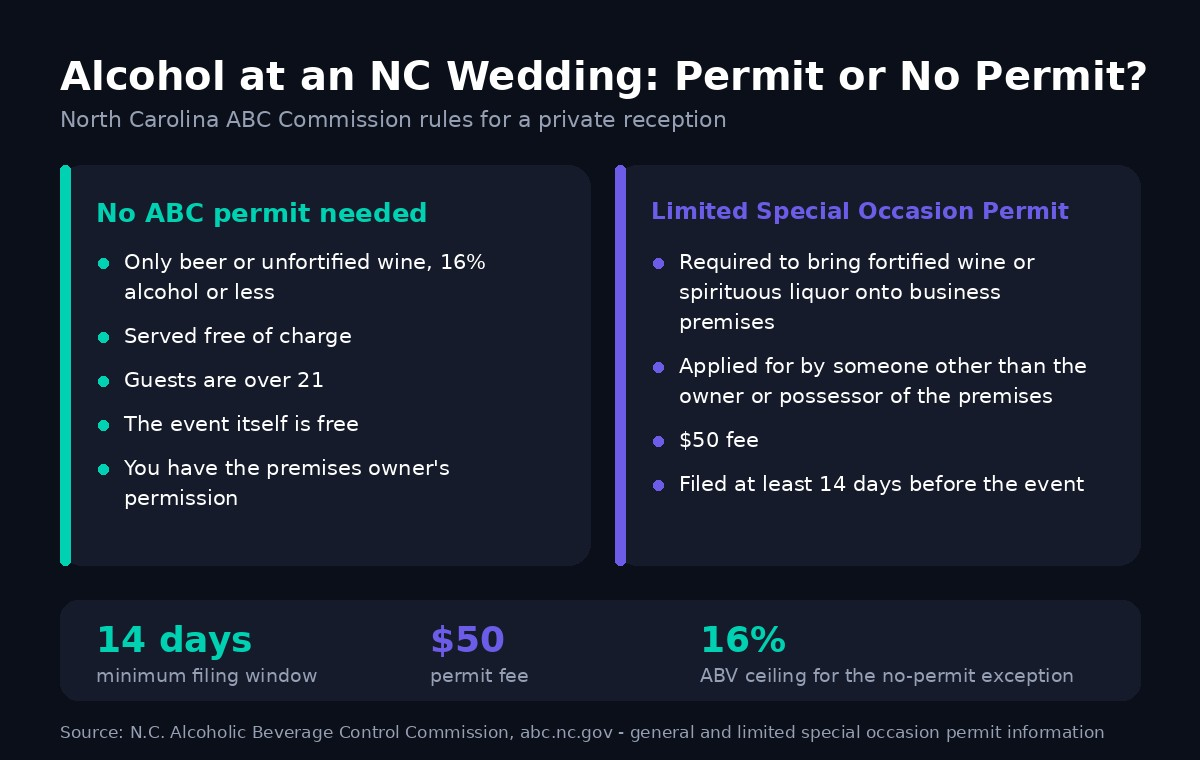
The North Carolina Alcoholic Beverage Control Commission draws a hard line, and it is not where people assume it is. According to the Commission, no ABC permit is needed if all of the following are true: only beer or unfortified wine of 16% alcohol or less is served, the alcohol is provided at no charge, guests are over 21, the event itself is free, and you have the permission of the owner of the premises.
Once spirituous liquor or fortified wine comes onto business premises, that changes. It takes a Limited Special Occasion permit, which the Commission describes as allowing the holder to bring fortified wine and spirituous liquor onto business premises and “serve those alcoholic beverages to the permittee’s guests at a reception, wedding, party or other special occasion.” The fee is $50, and applications must be submitted at least 14 days before the event.
One detail catches people every fall: the permit is issued to “any individual other than the owner or possessor of the premises.” Your venue cannot file it on your behalf. Somebody on your side of the contract has to be the applicant, and that person needs to know two weeks out, not two days out.
Who is on the hook if a guest drives home
Two separate rules operate in North Carolina, and a wedding can touch both. The first is statutory: under N.C. General Statute 18B-305(a), “It shall be unlawful for a permittee or his employee or for an ABC store employee to knowingly sell or give alcoholic beverages to any person who is intoxicated.” That reaches the permitted seller — the bar, the caterer holding the permit, the staff actually pouring.
The second is common law, and it reaches private hosts. In Hart v. Ivey, decided by the North Carolina Supreme Court in 1992, the court let a negligence claim proceed against hosts who served alcohol to an intoxicated guest they knew would shortly be driving, holding that “the defendants were under a duty to the people who travel on the public highways not to serve alcohol to an intoxicated individual who was known to be driving.” The claim stood on ordinary negligence principles rather than on the permit statute.
Which is why “we’re not selling anything, we’re just hosting” is not the end of the analysis here, and why the difference between host liquor liability — furnishing alcohol without selling it — and full liquor liability, which is for those in the business of selling, is worth asking about specifically instead of assuming either is included.
What your existing policies may and may not reach
There is no single product called North Carolina wedding insurance. Event coverage generally splits into two unrelated things: liability, which responds when someone is hurt or property is damaged, and cancellation or postponement coverage, which responds when deposits are lost to weather, illness or a vendor that folds. Different policies, different questions, and buying one does not get you the other.
As for what you already have: some homeowners and renters policies extend personal liability to an event hosted away from home, some carve out anything involving alcohol, and some treat a large hosted event differently than a backyard cookout. The answer lives on your declarations page and in your exclusions, not in a general rule. An umbrella sits on top of underlying coverage, so if the underlying policy does not respond, the umbrella usually will not either. Worth pulling the paperwork and asking a licensed agent about this specific event before the deposit goes non-refundable.
If you are the venue, the caterer or the vendor
The same weekend looks different from the other side of the contract. Certificates a venue collects are only as strong as the wording it asked for, and the venue’s own general liability coverage is the first line — the couple’s certificate is backup, not a substitute. For photographers, DJs, planners, florists, bakers and mobile bar operators, producing a certificate the same day it is requested is now part of getting booked in the Triangle. Where alcohol is sold rather than furnished free, who holds the permit and who carries liquor liability should be settled in writing beforehand.
What to actually do
- Get the venue’s insurance requirement in writing — the limit, the additional-insured wording, whether liquor coverage must be included, and the certificate deadline.
- Decide exactly what is being poured. Beer or unfortified wine at 16% ABV or less, free, to guests over 21, at a free event, with the owner’s permission means no ABC permit. Anything beyond that on business premises does not.
- If a Limited Special Occasion permit applies, count back 14 days from the wedding date and file the $50 application — and remember the applicant must be someone other than the owner or possessor of the premises.
- If alcohol is being sold, confirm who holds the permit and ask that bartender or caterer for their own certificate of insurance.
- Pull your homeowners or renters declarations page and ask a licensed agent what it does with an off-premises hosted event and with alcohol, before you need the answer.
- Handle the paperwork with its own clock. In Wake County a marriage license is $60, both parties must be present in person to apply, and the ceremony has to take place in North Carolina within 60 days.
Where to read more on our site
If you are hosting from your own place, the personal liability section of your home insurance is the first page to look at. If you rent, the same questions run through your renters insurance instead. If you are on the business side of the aisle, start with commercial insurance.
Sources
- N.C. Alcoholic Beverage Control Commission, General Permit Information — abc.nc.gov
- N.C. Alcoholic Beverage Control Commission, Limited Special Occasion and Special One-Time Permit Information — abc.nc.gov
- N.C. General Statute 18B-305 — codes.findlaw.com
- Hart v. Ivey, 332 N.C. 299 (1992) — law.justia.com
- Wake County Register of Deeds, Apply for a Marriage License — wake.gov
This article is general information about how coverage works in North Carolina. It is not advice about your specific policy. Coverage terms, limits and availability vary by policy — check your own declarations page or talk with a licensed agent before making a change.
While you’re in the neighborhood
We’re in Garner, right next door to the Post Office. Stop in or call — we’ll look at your current auto, home, life, or business coverage and tell you honestly whether we can do better. No pressure either way.
You Insurance Agency · Garner, NC · right next door to the Post Office · Auto · Home · Life · Commercial